

Intelligence has never been more consequential than it is today. In an era defined by strategic competition, gray-zone conflict, technological acceleration, and global information saturation, decision-makers must navigate uncertainty at unprecedented speed. Intelligence is no longer simply about secrets—it is about structured judgment under pressure.
States, corporations, and institutions now compete in environments where data is abundant but clarity is scarce. Technical collection systems generate massive volumes of information. Adversaries practice deception as doctrine. Artificial intelligence accelerates analysis while simultaneously amplifying manipulation. In this environment, intelligence tradecraft—the disciplined integration of collection, analysis, and communication—becomes a decisive strategic advantage.
Mastering intelligence tradecraft is no longer reserved for career intelligence officers. It is essential for leaders in defense, policy, business intelligence, and national security who must interpret signals accurately, detect deception early, and act responsibly amid ambiguity. Strategic success increasingly depends not on access to more information—but on the ability to think rigorously about the information available.
- - -
This executive program immerses students in the full architecture of intelligence—from operational collection disciplines to advanced analytic methodologies and strategic counterintelligence.
Across twenty-four weeks, participants move through three integrated pillars:
Operations Tradecraft — understanding how intelligence requirements are generated, how HUMINT and technical disciplines operate, how collection is managed, and how ethical and leadership standards sustain legitimacy and effectiveness.
Intelligence Analysis — mastering structured analytic techniques, cognitive bias mitigation, deception detection, forecasting, AI-assisted analysis, and executive-level briefing. Students learn not simply to interpret data, but to produce defensible, probability-based assessments that withstand scrutiny.
Global Intelligence Landscape & Counterintelligence — examining comparative intelligence systems (Five Eyes, PRC, Russia, Israel, Iran, North Korea), intelligence competition in strategic rivalry, insider threats, and institutional resilience in the face of penetration and influence.
Through case studies, historical analysis, and practitioner-led discussion, participants gain applied fluency in how intelligence actually functions in real-world environments—where time is compressed, political pressures exist, and uncertainty is unavoidable. The program develops the rare capacity to translate information into decision advantage without overstating certainty or succumbing to narrative bias.
What was once taught only to elite military and intelligence units across the world is offered here—unclassified, rigorous, and for the first time, accessible to civilian and international professionals who seek mastery in the modern influence battlespace.
Professionals in:
-
Intelligence, Defense & Policy
-
National Security
-
Technology
-
Private Sector & Business Intelligence
Operations Tradecraft
1. Intelligence as a Structured Operational System
Develop a systemic understanding of how intelligence operations are designed, tasked, and executed across HUMINT, SIGINT, GEOINT, MASINT, OSINT, and technical disciplines. Examine how requirements generation, collection management, interagency coordination, and field tradecraft translate strategic priorities into actionable reporting. Move beyond abstract models to understand how intelligence functions under political, legal, and operational constraints.
Application: Improve requirement design; Align collection to decision needs; Identify operational friction before it degrades output.
2. Human & Technical Collection Integration
Study the interplay between human sources and technical collection platforms, including their strengths, blind spots, and vulnerability to deception. Analyze how overreliance on technical precision or human reporting can distort confidence levels, and how effective operations require disciplined integration rather than stovepiping.
Application: Interpret reporting with calibrated confidence; Avoid false certainty; Strengthen cross-discipline collaboration.
3. Ethics, Leadership & Operational Responsibility
Explore the ethical and professional responsibilities inherent in intelligence operations, including legal boundaries, legitimacy, oversight, and institutional trust. Assess how leadership culture shapes operational risk, tradecraft standards, and long-term credibility.
Application: Protect institutional legitimacy; Navigate complex legal-ethical terrain; Lead responsibly under pressure.
4. Decision Advantage Through Analytic Rigor
Develop a deep understanding of intelligence analysis as a discipline designed to reduce uncertainty, not eliminate it. Examine how structured analytic techniques (SATs), hypothesis testing, and probabilistic reasoning improve estimative judgment. Study historic analytic failures to understand how bias, narrative anchoring, and politicization distort assessment.
Application: Increase analytic defensibility; Produce clearer probability-based judgments; Reduce bias-driven miscalculation.
Intelligence Analysis
5. Cognitive Bias, Deception & Analytic Failure
Gain applied insight into cognitive bias, motivated reasoning, mirror-imaging, and adversarial deception strategies. Explore how adversaries exploit analytic assumptions and institutional incentives to manipulate interpretation — not just information.
Application: Detect deception earlier; Identify assumption traps; Strengthen warning and risk assessment.
6. Strategic Forecasting & Emerging Technologies
Engage with indicator-based forecasting, scenario construction, AI-assisted analysis, and emerging analytic tools. Understand both the promise and the limitations of data-driven systems in strategic assessment.
Application: Improve strategic warning; Integrate AI responsibly; Enhance long-term forecasting capability.
7. Communicating Intelligence for Impact
Examine executive writing, briefing structure, and the translation of complex assessments into decision-ready products. Understand how clarity, confidence language, and evidentiary transparency influence leadership action.
Application: Deliver concise, high-impact briefings; Improve analytic uptake; Reduce distortion in high-pressure environments.
Global Intelligence Landscape & Counterintelligence
8. Comparative Intelligence Systems & Strategic Competition
Study the architecture, doctrine, and strategic culture of major intelligence actors including the Five Eyes alliance, the PRC’s party-state fusion model, Russian hybrid intelligence practices, and asymmetric systems such as Iran and North Korea. Examine how intelligence systems reflect political structures and strategic objectives.
Application: Assess adversary capabilities realistically; Anticipate adaptation; Inform competitive strategy.
9. Counterintelligence as Institutional Defense
Develop foundational and strategic understanding of counterintelligence — from insider threats and penetration risks to long-term intelligence competition. Explore how adversaries target not just secrets, but institutions, leadership networks, and decision processes.
Application: Identify vulnerability indicators; Strengthen organizational resilience; Protect operational integrity.
10. Intelligence Competition & the Long Game
Analyze intelligence as a sustained strategic competition operating below armed conflict. Examine how intelligence services shape geopolitical positioning, alliance cohesion, economic leverage, and long-term deterrence dynamics.
Application: Inform national and corporate strategy; Recognize gray-zone competition; Support long-horizon decision-making.


Dr. Elena Taube Bailey

Dr. Bailey brings a wealth of expertise spanning intelligence, policy, defense, and academia, as well as the nonprofit and private sectors. In academia, Dr. Bailey serves as the President and Program Director of Cyberpsychology at The Academy. Additionally, Dr. Bailey is a professor at the National Defense University’s College of Information and Cyberspace (CIC), where she teaches courses on influence warfare, cyberspace, national security, and strategic communication. She also holds the position of Adjunct Professor at Georgetown University, within the Master of Professional Studies in Applied Intelligence program. Dr. Bailey is the co-founder and CEO of Glocal, the world’s pioneering News Superintelligence platform, combining human collective intelligence and AI to elevate the information environment. Fluent in English, Russian, Ukrainian, and conversational Hebrew, Dr. Bailey resides in the Washington Metropolitan Area with her husband. Counterintelligence & Intelligence: Dr. Bailey served as a senior counterintelligence (CI) specialist at the Department of Defense, Defense Threat Reduction Agency (DTRA), where she focused on CI and worldwide cyber threat analysis. DTRA enables the DoD and the U.S. Government to prepare for and combat WMDs and improvised threats and to ensure nuclear deterrence. The agency’s legacy extends back to the Manhattan Engineering Project that was created to develop the world’s first atomic bomb during World War II. Prior to DTRA, Dr. Bailey served as a senior CI analyst at the Office of the Director of National Intelligence (ODNI), the National Counterintelligence and Security Center (NCSC), where she supported joint CI operations and led a program that drove intelligence integration and collaboration across the intelligence community (IC). During this time, Dr. Bailey also served as a Regional Subject Matter Expert (SME) to the DoD, Department of the Army, focusing on geographic, economic, industry, political, security, and geopolitical issues in Ukraine. Before her tenure at the Office of the Director of National Intelligence (ODNI), Dr. Bailey served as an Intelligence Analyst at the Central Intelligence Agency (CIA), where she collaborated closely with operations on counterterrorism initiatives. Additionally, Dr. Bailey successfully completed a rotation with the U.S. Department of State’s Center for Strategic Counterterrorism Communications where she specialized in developing and executing overt counterterrorism messaging operations. Foreign Governments: Between 2006 and 2007, Dr. Bailey provided political and media analysis, as well as, conducted public relations and strategic communication at the Consulate General of Israel in Los Angeles, and the Consulate General of Ukraine in San Francisco. Local Government & Politics: In 2009, Dr. Bailey served as a Legislative Deputy Assistant to Councilman Greig Smith, who was succeeded by Councilman Mitchell Englander, at the Los Angeles City Hall, Council District 12, representing the San Fernando Valley. More specifically, Dr. Bailey developed and maintained relationships between the district office and the diverse constituents in District 12. She also managed public relations with local, state and federal bodies, organizations, and the LA Joint Terrorism Taskforce (JTTF)—a partnership between the FBI and other law enforcement agencies charged with countering terrorism. Between 2004 and 2005, Dr. Bailey worked as a Presidential Campaign Coordinator in Fremont, CA. Then in 2007, she went on to serve as the Field Manager of California Region 3, for a presidential candidate. Education: Dr. Bailey completed a Ph.D. in Strategic Communication from George Mason University. She received a Masters Degree in Psychology from Harvard University and an M.B.A. from Georgetown University, McDonough School of Business with a focus in marketing, strategy and management. She had also received a Masters Degree in Politics with a focus in International Relations and American Government from New York University (NYU). Additionally, Dr. Bailey holds a Certificate in Intelligence Analysis from the Sherman Kent school for Intelligence Analysis, which is a training school for CIA intelligence analysts, a Graduate Certificate in Advanced Marketing Management from Georgetown University, and a Graduate Certificate in Messianic Jewish Studies from the Messianic Jewish Theological Institute. Dr. Bailey had pursued her undergraduate studies at Harvard University, the Hebrew University of Jerusalem, and UCLA where she graduated with honors and earned a B.A. in Political Science with a focus in International Relations and a minor in Middle Eastern Studies.
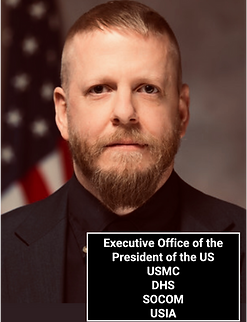
Dr. Howard Gambrill Clark
Professor Gambrill Clark has specialized in influence strategies and psychological warfare for 27 years. He graduated from Yale University with a degree in international relations focusing on the Middle East. While a student, Dr. Clark was a writer for U.S. Information Agency's Middle East / South Asia Division; served on the staff of the Senate Defense Appropriations Subcommittee; and studied Arabic at the American University in Cairo via a Department of Defense grant. After Yale, Dr. Clark served as policy analyst in the Executive Office of the President for the President’s Chief Economic Adviser, focusing on counterterrorism. Following the White House, Dr. Clark served in the U.S. Marine Corps as an intelligence officer and multi-national / special-unit commander with multiple deployments to Iraq as well as Afghanistan and the Philippines. After military service, Dr. Clark was presidentially appointed as Department of Homeland Security Chief Intelligence Officer's Special Assistant. Then, as Senior Intelligence Analyst for Homeland Security Counter-Radicalization, Dr. Clark helped lead the Intelligence Community in intelligence support to countering violent extremism. He was then promoted to Senior Intelligence Officer for Homeland Security Operations Intelligence (headquarters) before acting as consultant (contracted Senior Intelligence Analyst) to Special Operations Command's Counter-Radicalization Branch. While earning his Ph.D. from King's College London War Studies, he served as senior counter-violent-extremism adviser and trainer for USAID, USSOCOM, USDA, DOS, Special Forces, USMC, NATO, and partner governments in southwest Asia and Associate Fellow at the International Centre for the Study of Radicalisation. Recent positions includes: CEO, Stability Institute (non-profit) - training and advising special operators and stabilization professionals on defeating extremist groups throughout five continents. Faculty, National Defense College (UAE) - director and coordinator for 'Countering-Violent-Extremism,' 'Information and Cyberwarfare,' 'Media and National Security,' and 'International Security' programs (sponsored by the U.S. National Defense University) Lecturer, Civil and Political School (Ukraine) He is now the president of Narrative Strategies, where he teaches and researches the fields of strategic influence, psychological warfare, counterterrorism, and countering violent extremism. He is also an associate professor of influence strategy and psychological warfare in Washington, DC. Select books / theses: Influence Warfare Volume I: A Blueprint, Narrative Strategies Ink, Washington, DC, 2021 Information Warfare: The Lost Tradecraft, Narrative Strategies, LLC, Washington, DC, 2017 Information as an Instrument of State Power: A Primer, UAE National Defense College, UAE General Headquarters, 2017 Countering Violent Extremism: A Primer, UAE National Defense College, UAE General Headquarters, 2017 Defeating Violent Extremists: The Tradecraft, UAE National Defense College, UAE General Headquarters, 2016 Village Stability Operations, U.S. Army Peacekeeping & Stability Operations Institute, 2015 (coauthor) Lions of Marjah: Why Marjah’s Militia Combats Violent Extremists, King’s College London thesis, 2014 Revolt Against Al-Qa`ida: A Strategy to Empower Muslims and Collapse International Insurgency, Light of New Orleans Publishing, New Orleans, 2010 Narrative Analysis: Taliban, Special Operations Command, Tampa, 2010 (coauthor) Kill Al Qaeda, Light of New Orleans Publishing, New Orleans, 2009 Select articles and chapters: "War and Narrative," chapter in Dangerous Narratives: Warfare, Strategy, Statecraft, Narrative Strategies Ink, 2020. "How to Teach Influence: Thoughts on a New Discipline," article in Teaching Public Diplomacy and the Information Instruments of Power in a Complex Media Environment, National War College and U.S. Advisory Commission on Public Diplomacy, Washington, DC 2020. “Money and Stabilization,” National Defense Journal, National Defense College, UAE, June 2017 “The Responsibility to Protect in the Context of State-Sponsored Terror,” Defense and Intelligence Norway,” July 2016 (coauthor) “Go Local,” American Interest, July/August 2015 “Regimental Effects Operations Center: Enhancing Situational Awareness and Achieving Unity of Effort in Nonkinetics,” The Marine Corps Gazette, Volume 96, Issue 8, 2012 (supporting author) “Ending Al Qaeda,” American Interest, Volume 6, Number 6, July/August 2011 (coauthor) “The Accidental Ideologue,” Jane's Terrorism and Security Monitor, 2010 Twenty-eight classified or official-use-only cross-Intelligence-Community strategic assessments on countering al-Qa`ida for cabinet-level leaders and White House, 2007 – 2009 Three National Economic Council damage assessments for potential biological terrorist attacks, 2001 Six articles on Middle East leadership and Iraqi resistance for Department of State, 1999.