

The Executive Certificate in Cognitive & Influence Warfare examines one of the most consequential areas of modern strategic competition: the contest to shape how people perceive reality, assign meaning, make decisions, and act. Moving beyond traditional studies of propaganda and disinformation, this program explores the biological, psychological, and social dimensions of cognition—from attention, stress, emotion, and perception to identity, sacred values, trust, narratives, networks, and collective behavior.
Students explore how these human dimensions intersect with today’s rapidly evolving information environment, including social media, algorithms, behavioral data, artificial intelligence, synthetic content, and emerging technologies. Through real-world cases, the program compares how the United States, Russia, China, Iran, North Korea, NATO and Europe, non-state actors, and corporations approach cognitive and influence warfare and seek to affect perception, judgment, behavior, and strategic decision-making.
The program ultimately confronts a defining challenge of modern conflict: as technology creates increasingly sophisticated ways to access and influence human cognition, how do we recognize these efforts, build resilience, and protect the human capacity to think and decide independently?
Few programs bring these disciplines together through this biological, psychological, social, technological, and strategic lens. At The Academy, students learn directly from leading experts and practitioners working at the forefront of cognitive and influence warfare.
KEY DETAILS
Who Will Benefit? Individuals interested in:
-
Intelligence, Defense & Policy
-
National Security & Cyberspace
-
Private Sector & Business Intelligence
Where:
Live-Online (Synchronous)
When:
Winter (February-March 2027)
Fall (September-October 2027)
Duration:
2 courses, 4 weeks each
Total of 8 weeks, 16 modules, 6 credits
Tuition:
$5,100 for the two courses.
Payment plan is available.
This program reflects an intensive graduate-level curriculum providing advanced interdisciplinary study in the rapidly evolving fields of cognitive and influence warfare.
Pathways:
The Academy recognizes that professionals engage education differently. We therefore offer 2 structured pathways:
1. Academic Pathway (For-Credit Equivalent)- includes graded assignments and live virtual engagement. Ideal for those seeking academic equivalency or deeper written analysis.
2. Executive Pathway (Working Professional)- focused on live discussion, strategic application, and live virtual engagement. No formal written assignments are required. Completion is assessed on participation and engagement, and recorded as Pass/Fail.
Stand Out in a Competitive Intelligence Career Field:
This program allows students to go beyond a traditional degree by developing specialized knowledge in an emerging area of strategic competition. Students examine how biological, psychological, and social factors shape cognition; how narratives, networks, technology, and the information environment can affect perception and decision-making; and how major state and non-state actors approach competition in the cognitive domain.
That specialization can tell a prospective employer something meaningful: you have invested in understanding where modern conflict and strategic competition are going next. The certificate adds a distinctive area of expertise to your résumé and professional profile—helping demonstrate that you bring knowledge beyond the conventional academic foundation held by many other applicants.
Program Key Takeaways:
* Understand Cognitive & Influence Warfare — Distinguish cognitive and influence warfare from information operations, psychological operations, propaganda, and related disciplines, and understand how they function in modern strategic competition. * Understand How Human Cognition Can Be Influenced — Examine the biological, psychological, and social factors that shape attention, perception, emotion, identity, judgment, decision-making, and behavior. * Analyze Cognitive & Influence Operations — Identify how narratives, networks, trust, technology, algorithms, disinformation, and the information environment can be used to create cognitive effects and assess the vulnerabilities they may exploit. * Understand How Major Actors Compete in the Cognitive Domain — the different approaches used by the United States, Russia, China, Iran, North Korea, NATO and Europe, non-state actors, and corporations. * Anticipate and Defend Against Emerging Cognitive Threats — Evaluate cognitive vulnerabilities, resilience, legal and ethical constraints, and the implications of AI, synthetic media, behavioral technologies, neurotechnology, and other emerging capabilities for the future of cognitive warfare.
COURSE OVERVIEW
COURSE 1 — THE HUMAN COGNITIVE DOMAIN: HOW COGNITION IS SHAPED, INFLUENCED & TARGETED Module 1 — Cognitive & Influence Warfare: Competing in the Cognitive Domain Wars have always sought to affect what adversaries think and do. What has changed is the scale, speed, precision, and access through which human cognition can now be reached. This foundational module introduces cognitive warfare and influence warfare as related but distinct forms of strategic competition. Students examine how they differ from information warfare, information operations, psychological operations, propaganda, and strategic communication, while exploring where these disciplines intersect. The module establishes cognition as the ultimate focus of cognitive warfare and introduces the biological, psychological, and social dimensions that shape human perception, judgment, decision-making, and behavior. Students begin with the central question that will guide the certificate: How can an actor shape the conditions under which another person, organization, military, or society perceives reality and makes decisions? Module 2 — The Human Mind as Operational Terrain The human mind is not a passive receiver of information. It selects, filters, predicts, interprets, remembers, forgets, and assigns meaning. Students examine how attention, perception, emotion, memory, identity, judgment, and decision-making interact across biological, psychological, and social systems. The module introduces subconscious processing and predictive cognition and explores why people can encounter the same information yet construct very different interpretations of reality. Students also examine an important principle: effective influence does not always require changing what someone believes. It may instead work through assumptions, expectations, emotions, identities, and mental models that already exist. Module 3 — Biological Dimensions: Brain, Body, Attention & Cognitive Performance Cognition begins with a biological system—and that system has limits. Students examine the brain and nervous system as they relate to attention, memory, emotion, threat detection, executive control, motivation, and decision-making. The module explores how stress, fatigue, sleep deprivation, pain, sensory stimulation, cognitive overload, and neurochemistry can affect cognitive performance and potentially create conditions of vulnerability. Students will also explore emerging neurotechnologies and distinguish scientifically demonstrated capabilities from exaggerated claims about direct manipulation of the brain. The strategic question is straightforward but consequential: What happens to decision-making when the biological systems supporting cognition are stressed, overloaded, exhausted, distracted, or disrupted? Module 4 — Psychological Dimensions: Perception, Emotion, Identity & Decision-Making Influence is rarely applied to an empty mind. People already possess beliefs, identities, memories, expectations, values, fears, and assumptions through which new information is interpreted. Students examine predictive processing, mental models, cognitive bias, motivated reasoning, cognitive dissonance, emotion, risk perception, and decision-making under uncertainty. The module also incorporates psychological orders and sacred values—exploring how identity, foundational narratives, worldview, and deeply held values can influence how people interpret information. Students consider why some messages resonate, others are rejected, and still others generate backlash. The objective is to understand not simply what information people receive, but the psychological architecture through which they give that information meaning. Module 5 — Social Dimensions: Trust, Identity, Networks & Collective Behavior Cognition does not occur in isolation. Humans interpret the world through families, communities, cultures, institutions, networks, leaders, peers, and groups. Students examine social identity, conformity, social proof, authority, trust, credibility, legitimacy, group polarization, collective memory, grievance, belonging, and perceptions of threat. They explore how individual interpretations can develop into collective beliefs—and how those beliefs can spread through social networks and influence organizational or societal behavior. This module further discusses agents of influence, networks, population analysis, and imagined communities. Students learn why influence may depend less on finding the perfect message than on understanding who is trusted, how communities are connected, and how meaning travels through a social system. Module 6 — Narrative & Influence Warfare: Shaping Meaning, Perception & Behavior Facts describe events. Narratives help people decide what those events mean. This module examines how influence warfare operates across biological, psychological, and social dimensions to affect perception, interpretation, judgment, and behavior. Students explore strategic narratives, foundational narratives, historical memory, symbols, identity, emotion, networks, trusted messengers, subtlety, consonance, and resonance. The module incorporates the strongest elements of the Five Pillars of Influence, and Seven Influence Tradecraft. Students examine why enduring influence often does not look like influence at all. Rather than simply telling an audience what to believe, sophisticated influence may alter context, reinforce existing assumptions, activate identities, introduce doubt, or change the meaning assigned to events. Module 7 — Cognitive Terrain & Influence Vulnerability Mapping Before attempting to understand an influence or cognitive operation, individuals must understand the terrain on which it is operating. This integrative module teaches students to assess cognitive terrain by bringing together the biological, psychological, social, and informational dimensions studied throughout the first seven modules. Students examine critical decisions and behaviors, cognitive functions, identities, sacred values, foundational narratives, trusted relationships, influential networks, environmental pressures, information dependencies, access pathways, vulnerabilities, and protective factors within a leader, organization, military force, institution, or population. Crucially, students learn to distinguish general human susceptibility from an actual exploitable vulnerability and to consider alternative explanations, intelligence gaps, indicators, and analytic confidence. By the end of Module 7, students have the analytical framework they need to examine how actual actors operate within the cognitive domain. Module 8 — Information Environment Architecture: Accessing & Amplifying Cognition Today's information environment provides unprecedented access to human attention, behavior, relationships, preferences, and patterns of interaction. Students examine digital platforms, social media, search engines, recommendation algorithms, personalization, behavioral data, microtargeting, bots, synthetic personas, influencers, artificial intelligence, and cross-platform information flows. The module examines how these systems interact with biological attention, psychological vulnerabilities, and social networks to influence what people encounter, how frequently they encounter it, who appears to endorse it, and how important or credible it seems. Students also examine deception, disinformation, synthetic content, artificial amplification, and information saturation—not merely as problems of false information, but as potential mechanisms for producing confusion, uncertainty, distrust, emotional activation, cognitive overload, and distorted perceptions of reality. COURSE 2 — APPLIED COGNITIVE & INFLUENCE WARFARE Module 9 — The United States: Doctrine, Institutions, and Coordination This module examines how the United States understands and addresses competition in the cognitive domain. Students explore the roles of the Department of Defense, intelligence community, interagency partners, academia, and private sector in protecting decision-making, military effectiveness, institutional trust, and societal resilience. Students examine how information operations, psychological operations, cyber operations, intelligence, neuroscience, behavioral science, strategic communication, and emerging technologies contribute to cognitive and influence capabilities—and the coordination challenges created by divided authorities, institutional boundaries, domestic legal protections, and the absence of a fully integrated national cognitive-warfare doctrine. Module 10 — Russia's Cognitive Warfare and Reflexive Control This module examines Russia's approach to cognitive and influence warfare through reflexive control, information confrontation, strategic deception, ambiguity, narrative, and manipulation of an adversary's decision-making environment. Using the Russia–Ukraine war as a central case, students examine how history, identity, fear, grievance, uncertainty, social division, narrative preconditioning, and perceptions of escalation can be used alongside cyber, diplomatic, economic, intelligence, and military activity. Rather than simply identifying Russian messages, students ask a more sophisticated question: What does Russia want the target to perceive, conclude, decide, or do—and what biological, psychological, and social conditions could make that effect possible? Module 11 — China's Cognitive Warfare and the Three Warfares This module examines China's evolving approach to cognitive-domain operations and the pursuit of strategic and cognitive advantage. Students study psychological warfare, media warfare, and legal warfare under the Three Warfares framework alongside artificial intelligence, behavioral data, surveillance, economic leverage, diplomatic pressure, and military signaling. The module also examines the roles of the Chinese Communist Party, People's Liberation Army, United Front networks, state-controlled media, private companies, and overseas communities in shaping perceptions of legitimacy, sovereignty, national power, and the future international order. Module 12 — Iran's Cognitive Warfare and Proxy Ecosystems & North Korea's Cognitive Warfare and Regime Survival This module examines how Iran conducts cognitive and influence activities through interconnected state institutions, military organizations, media systems, cyber capabilities, religious networks, and regional proxies. Students explore how themes of resistance, martyrdom, sovereignty, victimization, religious legitimacy, and opposition to foreign domination are adapted for different audiences. The module also examines ambiguity, deniable actors, psychological pressure, coercive signaling, and calibrated escalation as mechanisms for influencing adversary perceptions and decisions while managing the risks of direct military confrontation. This module also examines North Korea's use of cognitive control and cognitive warfare in support of regime survival. Students examine how isolation, information control, leadership mythology, ideological education, surveillance, fear, punishment, and continuous portrayals of external threat contribute to the construction of political reality. The module then turns outward to strategic deception, cyber operations, military demonstrations, coercive messaging, and manipulation of perceived risk. Students compare two fundamentally different objectives: controlling the cognitive environment of a domestic population and influencing the decision-making of a foreign adversary. Module 13 — Europe and NATO: Cognitive Warfare and Democratic Resilience This module examines how NATO and European states understand cognitive warfare within the broader context of hybrid threats, societal resilience, strategic competition, and collective defense. Students explore NATO's developing approach to the cognitive dimension of warfare as well as European initiatives addressing foreign interference, disinformation, election security, institutional trust, and civil preparedness. Lessons from Estonia, Finland, Ukraine, and other European democracies demonstrate how cognitive resilience intersects with national security. The module also confronts one of the program's most important questions: How can democratic societies defend their cognitive environment without undermining freedom of expression, political pluralism, privacy, or public trust? Module 14 — Non-State Actors and Decentralized Cognitive Operations States do not have a monopoly on cognitive or influence capabilities. Students examine how terrorist organizations, extremist movements, cartels, ideological communities, influencers, and decentralized online groups exploit identity, belonging, grievance, fear, humiliation, social isolation, and perceived injustice to recruit supporters, reinforce commitment, encourage action, and weaken opposition. The module also examines memetic communication, algorithmic amplification, online radicalization, leaderless networks, synthetic personas, and how decentralized communities can generate significant cognitive effects without possessing a traditional hierarchy or formal command structure. Module 15 — Corporate Cognitive Warfare and the Commercial & Entertainment Battlespace The cognitive domain extends well beyond national security. Corporations, technology platforms, entertainment companies, brands, and media producers all operate within environments where attention, perception, identity, trust, and behavior have strategic and economic value. This module examines corporations and entertainment industries as targets, participants, and powerful actors within the broader cognitive environment. Students explore how advertising, branding, behavioral data, platform design, algorithms, influencers, film, television, streaming, gaming, and popular culture can shape perceptions and social norms. Particular attention is given to social impact entertainment—the intentional use of entertainment and storytelling to increase awareness, influence attitudes, encourage discussion, or contribute to social and behavioral change. Participants examine how narratives and characters can engage emotion, identity, empathy, and social identification, allowing entertainment to influence how audiences understand issues without resembling traditional persuasive communication. The module also examines corporate reputation, consumer trust, employee and investor confidence, coordinated reputation attacks, activist pressure, synthetic media, market manipulation, behavioral targeting, and algorithmic control over visibility. Students ultimately consider an increasingly important distinction: when does ordinary persuasion, storytelling, or advocacy become strategic influence—and what ethical responsibilities accompany the ability to shape perception and behavior at scale? Module 16: Law, Ethics & the Future Cognitive Battlespace This module examines the legal and ethical challenges created by efforts to understand, influence, monitor, or protect human cognition. Students will explore freedom of expression, privacy, surveillance, informed consent, data protection, domestic and foreign operational authorities, military constraints, platform governance, neuroethics, and emerging concepts of cognitive liberty and neurorights. The module considers where legitimate persuasion may cross into manipulation or coercion and how democratic societies can strengthen cognitive security without controlling political thought or suppressing lawful disagreement. Particular attention will be given to proportionality, accountability, transparency, human agency, and the risk that capabilities developed for cognitive defense could themselves be misused. Building from these legal and ethical foundations, participants will then look toward the future cognitive battlespace and examine how emerging science and technology may transform cognitive and influence warfare. Topics include artificial intelligence, generative persuasion, synthetic identities, autonomous cognitive agents, behavioral prediction, population neuroanalytics, brain-computer interfaces, neurostimulation, biotechnology, wearable sensors, human-machine integration, and synthetic cognitive modeling. Students will distinguish emerging capabilities from speculative claims while considering how technological advances could make cognitive effects increasingly personalized, scalable, persistent, and difficult to detect or attribute. The program concludes by asking students to look beyond today's threats and consider what may come next: How will governments, militaries, corporations, and societies protect human judgment, autonomy, and decision-making as the ability to understand and potentially influence human cognition becomes increasingly sophisticated?

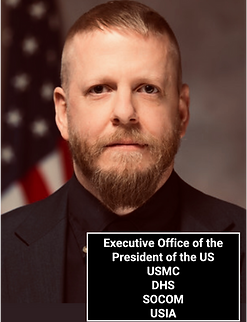
Dr. Howard Gambrill Clark

Professor Gambrill Clark has specialized in influence strategies and psychological warfare for 27 years. He graduated from Yale University with a degree in international relations focusing on the Middle East. While a student, Dr. Clark was a writer for U.S. Information Agency's Middle East / South Asia Division; served on the staff of the Senate Defense Appropriations Subcommittee; and studied Arabic at the American University in Cairo via a Department of Defense grant. After Yale, Dr. Clark served as policy analyst in the Executive Office of the President for the President’s Chief Economic Adviser, focusing on counterterrorism. Following the White House, Dr. Clark served in the U.S. Marine Corps as an intelligence officer and multi-national / special-unit commander with multiple deployments to Iraq as well as Afghanistan and the Philippines. After military service, Dr. Clark was presidentially appointed as Department of Homeland Security Chief Intelligence Officer's Special Assistant. Then, as Senior Intelligence Analyst for Homeland Security Counter-Radicalization, Dr. Clark helped lead the Intelligence Community in intelligence support to countering violent extremism. He was then promoted to Senior Intelligence Officer for Homeland Security Operations Intelligence (headquarters) before acting as consultant (contracted Senior Intelligence Analyst) to Special Operations Command's Counter-Radicalization Branch. While earning his Ph.D. from King's College London War Studies, he served as senior counter-violent-extremism adviser and trainer for USAID, USSOCOM, USDA, DOS, Special Forces, USMC, NATO, and partner governments in southwest Asia and Associate Fellow at the International Centre for the Study of Radicalisation. Recent positions includes: CEO, Stability Institute (non-profit) - training and advising special operators and stabilization professionals on defeating extremist groups throughout five continents. Faculty, National Defense College (UAE) - director and coordinator for 'Countering-Violent-Extremism,' 'Information and Cyberwarfare,' 'Media and National Security,' and 'International Security' programs (sponsored by the U.S. National Defense University) Lecturer, Civil and Political School (Ukraine) He is now the president of Narrative Strategies, where he teaches and researches the fields of strategic influence, psychological warfare, counterterrorism, and countering violent extremism. He is also an associate professor of influence strategy and psychological warfare in Washington, DC. Select books / theses: Influence Warfare Volume I: A Blueprint, Narrative Strategies Ink, Washington, DC, 2021 Information Warfare: The Lost Tradecraft, Narrative Strategies, LLC, Washington, DC, 2017 Information as an Instrument of State Power: A Primer, UAE National Defense College, UAE General Headquarters, 2017 Countering Violent Extremism: A Primer, UAE National Defense College, UAE General Headquarters, 2017 Defeating Violent Extremists: The Tradecraft, UAE National Defense College, UAE General Headquarters, 2016 Village Stability Operations, U.S. Army Peacekeeping & Stability Operations Institute, 2015 (coauthor) Lions of Marjah: Why Marjah’s Militia Combats Violent Extremists, King’s College London thesis, 2014 Revolt Against Al-Qa`ida: A Strategy to Empower Muslims and Collapse International Insurgency, Light of New Orleans Publishing, New Orleans, 2010 Narrative Analysis: Taliban, Special Operations Command, Tampa, 2010 (coauthor) Kill Al Qaeda, Light of New Orleans Publishing, New Orleans, 2009 Select articles and chapters: "War and Narrative," chapter in Dangerous Narratives: Warfare, Strategy, Statecraft, Narrative Strategies Ink, 2020. "How to Teach Influence: Thoughts on a New Discipline," article in Teaching Public Diplomacy and the Information Instruments of Power in a Complex Media Environment, National War College and U.S. Advisory Commission on Public Diplomacy, Washington, DC 2020. “Money and Stabilization,” National Defense Journal, National Defense College, UAE, June 2017 “The Responsibility to Protect in the Context of State-Sponsored Terror,” Defense and Intelligence Norway,” July 2016 (coauthor) “Go Local,” American Interest, July/August 2015 “Regimental Effects Operations Center: Enhancing Situational Awareness and Achieving Unity of Effort in Nonkinetics,” The Marine Corps Gazette, Volume 96, Issue 8, 2012 (supporting author) “Ending Al Qaeda,” American Interest, Volume 6, Number 6, July/August 2011 (coauthor) “The Accidental Ideologue,” Jane's Terrorism and Security Monitor, 2010 Twenty-eight classified or official-use-only cross-Intelligence-Community strategic assessments on countering al-Qa`ida for cabinet-level leaders and White House, 2007 – 2009 Three National Economic Council damage assessments for potential biological terrorist attacks, 2001 Six articles on Middle East leadership and Iraqi resistance for Department of State, 1999.

Dr. Elena Taube Bailey
Dr. Bailey brings a wealth of expertise spanning intelligence, policy, defense, and academia, as well as the nonprofit and private sectors. In academia, Dr. Bailey serves as the President and Program Director of Cyberpsychology at The Academy. Additionally, Dr. Bailey is a professor at the National Defense University’s College of Information and Cyberspace (CIC), where she teaches courses on influence warfare, cyberspace, national security, and strategic communication. She also holds the position of Adjunct Professor at Georgetown University, within the Master of Professional Studies in Applied Intelligence program. Dr. Bailey is the co-founder and CEO of Glocal, the world’s pioneering News Superintelligence platform, combining human collective intelligence and AI to elevate the information environment. Fluent in English, Russian, Ukrainian, and conversational Hebrew, Dr. Bailey resides in the Washington Metropolitan Area with her husband. Counterintelligence & Intelligence: Dr. Bailey served as a senior counterintelligence (CI) specialist at the Department of Defense, Defense Threat Reduction Agency (DTRA), where she focused on CI and worldwide cyber threat analysis. DTRA enables the DoD and the U.S. Government to prepare for and combat WMDs and improvised threats and to ensure nuclear deterrence. The agency’s legacy extends back to the Manhattan Engineering Project that was created to develop the world’s first atomic bomb during World War II. Prior to DTRA, Dr. Bailey served as a senior CI analyst at the Office of the Director of National Intelligence (ODNI), the National Counterintelligence and Security Center (NCSC), where she supported joint CI operations and led a program that drove intelligence integration and collaboration across the intelligence community (IC). During this time, Dr. Bailey also served as a Regional Subject Matter Expert (SME) to the DoD, Department of the Army, focusing on geographic, economic, industry, political, security, and geopolitical issues in Ukraine. Before her tenure at the Office of the Director of National Intelligence (ODNI), Dr. Bailey served as an Intelligence Analyst at the Central Intelligence Agency (CIA), where she collaborated closely with operations on counterterrorism initiatives. Additionally, Dr. Bailey successfully completed a rotation with the U.S. Department of State’s Center for Strategic Counterterrorism Communications where she specialized in developing and executing overt counterterrorism messaging operations. Foreign Governments: Between 2006 and 2007, Dr. Bailey provided political and media analysis, as well as, conducted public relations and strategic communication at the Consulate General of Israel in Los Angeles, and the Consulate General of Ukraine in San Francisco. Local Government & Politics: In 2009, Dr. Bailey served as a Legislative Deputy Assistant to Councilman Greig Smith, who was succeeded by Councilman Mitchell Englander, at the Los Angeles City Hall, Council District 12, representing the San Fernando Valley. More specifically, Dr. Bailey developed and maintained relationships between the district office and the diverse constituents in District 12. She also managed public relations with local, state and federal bodies, organizations, and the LA Joint Terrorism Taskforce (JTTF)—a partnership between the FBI and other law enforcement agencies charged with countering terrorism. Between 2004 and 2005, Dr. Bailey worked as a Presidential Campaign Coordinator in Fremont, CA. Then in 2007, she went on to serve as the Field Manager of California Region 3, for a presidential candidate. Education: Dr. Bailey completed a Ph.D. in Strategic Communication from George Mason University. She received a Masters Degree in Psychology from Harvard University and an M.B.A. from Georgetown University, McDonough School of Business with a focus in marketing, strategy and management. She had also received a Masters Degree in Politics with a focus in International Relations and American Government from New York University (NYU). Additionally, Dr. Bailey holds a Certificate in Intelligence Analysis from the Sherman Kent school for Intelligence Analysis, which is a training school for CIA intelligence analysts, a Graduate Certificate in Advanced Marketing Management from Georgetown University, and a Graduate Certificate in Messianic Jewish Studies from the Messianic Jewish Theological Institute. Dr. Bailey had pursued her undergraduate studies at Harvard University, the Hebrew University of Jerusalem, and UCLA where she graduated with honors and earned a B.A. in Political Science with a focus in International Relations and a minor in Middle Eastern Studies.

Dr. James Giordano
Dr. James Giordano is Head of the Center for Strategic Deterrence and Weapons of Mass Destruction Studies of the Institute for National Strategic Studies at the National Defense University, Washington, DC, USA; and serves as Special Advisor to the Assistant Secretary of Defense (CBRN). His work explores the development and use of emerging scientific techniques and technologies as weapons of maximally targeted disruption; and the development and deployment of novel approaches to biosecurity, biodefense and strategic biodeterrence. Dr. Giordano is also Professor Emeritus of Neurology and Biochemistry, and Chair Emeritus of the Neuroethics Program, and Founding Chair Emeritus of the Project on Military Medicine at Georgetown University Medical Center, and served as a senior advisor to DARPA, NATO; UK Ministry of Defense; German Bundeswehr, Interpol, The European Union Human Brain Project Program on Dual-Use, the Organisation for Economic Cooperation and Development, and the World Health Organization. He is globally renowned for his work on the neurological effects and pathologic mechanisms of directed energies relevant to the anomalous health incidents (AHI) of the so-called Havana Syndrome; and he served from 2016-2019 as the consulting forensic neuroscientist on the original cases from the US Embassy in Havana, working with the Department of State, US Special Operations Command, and subsequently with the Department of Defense AHI Cross-Functional Team. Dr. Giordano was awarded a PhD in biological psychology from the City University of New York; a DPhil in digital sciences and technology from the University of Regensburg, GER, and completed post-doctoral fellowships in neuropathology and toxicology at the Johns Hopkins University; and bioethics and health policy at the Neiswanger Institute of Loyola University, IL. He is a Fellow of the Hastings Center for Ethics; the European Society for Science and Arts; the Royal Society of Medicine (UK); Royal Society of Public Health (UK), and was a Fulbright Professorial Fellow. A designated US Naval Aerospace Physiologist and Psychologist, he served with the US Navy and Marine Corps.

Dr. Brian L. Steed
Dr. Brian L. Steed brings more than 13 years of experience advising senior U.S. and international leaders, giving The Academy students direct access to insights forged at the intersection of strategy, military operations, history, and cross-cultural engagement. He spent eight and a half years living and serving abroad, including extensive work in and alongside foreign militaries. At The Academy, students learn from a scholar-practitioner who does more than study conflict—he understands how senior leaders navigate it. Dr. Steed is a Professor of Military History and Teaching Team Leader at the U.S. Army Command and General Staff College, where he leads multidisciplinary faculty and educates mid-career military professionals preparing to operate in complex strategic environments. He is also a Senior Fellow at Narrative Strategies, an esteemed member of The Academy’s Board of Advisors, and an honored Guest Lecturer at The Academy. An author, military theorist, and recognized proponent of maneuver in the narrative space, Dr. Steed examines how narratives shape the cognitive landscape, influence political and military behavior, and create strategic opportunities in competition and conflict. His work translates historical analysis into practical insight for contemporary decision-makers, helping leaders understand not merely what is happening, but why it matters and how the strategic environment can be influenced. His scholarship has produced original concepts in narrative warfare, cross-cultural competency, and the interpretation of modern conflict. He is the author of eight books, most of which apply the lessons of history to current and future strategic challenges. Dr. Steed holds an interdisciplinary Ph.D. in Political Science and History from the University of Missouri–Kansas City, an M.A. in International Relations from Norwich University, and a B.A. in History from Brigham Young University.

Dr. John A. Pennell
Dr. John A. Pennell is a contractor with the U.S. Department of Defense's Irregular Warfare Center (IWC) as Editor-in-Chief of PRISM: The Journal of Complex Operations and as an Instructor, Curriculum Developer, and Senior Practitioner. He’s a Research Fellow with Arizona State University’s (ASU) Future Security Initiative and Professor of Practice with ASU’s School of Politics and Global Studies; a Non-Resident Senior Fellow with the Global & National Security Institute (GNSI) at the University of South Florida (USF); a Non-Resident Fellow with the Irregular Warfare Institute (IWI)-Europe Program; and a Senior Diplomacy Fellow with Narrative-Strategies. Dr. Pennell is also a guest speaker and lecturer on information operations, hybrid warfare, post-conflict governance, and new technologies with U.S. and international universities, the U.S. State Department, and U.S. professional military education institutions. Dr. Pennell is a retired US Senior Foreign Service Officer with 20+ years of field experience including in active combat and hybrid warfare zones. He’s also a published author, including a 2024 book on Russia’s irregular warfare activities in Syria and Ukraine. He holds a PhD from King’s College London and masters degrees from the National War College and American University.