

Enter the hidden world where intelligence, human behavior, and state power converge.
The U.S. HUMINT & Covert Action Executive Certificate offers an extraordinary examination of how intelligence services recruit human sources, protect clandestine relationships, communicate in secret, and design operations intended to influence events without publicly revealing the sponsor’s role. Students will explore the psychology of spotting, assessing, developing, and recruiting sources; examine clandestine tradecraft such as cover, surveillance awareness, secure meetings, signals, and dead drops; and analyze how covert operations are planned, authorized, protected, and evaluated.
The program then takes students inside three of the world’s most consequential intelligence traditions. Through compelling historical and contemporary cases, students will compare British intelligence and its legacy of subtlety and deception, Israel’s security-driven approach to HUMINT and covert operations, and Russia’s integrated use of espionage, active measures, political warfare, proxies, and deniable influence.
The program concludes by turning the lens around: How can governments and organizations recognize recruitment attempts, uncover hostile intelligence activity, detect covert influence, and protect themselves from penetration and manipulation?
Designed for professionals and students interested in intelligence, national security, defense, diplomacy, law enforcement, international affairs, and strategic influence, this program goes beyond popular portrayals of espionage to reveal the psychology, tradecraft, strategic purpose, and consequences of operating in the shadows.
KEY DETAILS
Who Will Benefit:
-
Intelligence, Defense & Policy
-
National Security
-
Private Sector & Business Intelligence
Where:
Live-Online (Synchronous)
Duration:
4 Weeks, 8 Modules, 3 Credits
When:
Summer (June 2027)
Tuition:
$2,550
Stand Out in a Competitive Intelligence Career Field:
Intelligence is a highly competitive career field, and employers need more than applicants who are simply interested in national security. They need professionals who understand how intelligence actually works—how requirements drive collection, how multiple intelligence disciplines contribute to understanding, how analysts evaluate incomplete and sometimes deceptive information, and how intelligence is ultimately transformed into judgments that support decision-makers.
The Executive Certificate in Intelligence Tradecraft gives participants a distinctive foundation across the intelligence profession. Rather than focusing on a single intelligence discipline, participants develop an understanding of intelligence collection and operations, analysis and forecasting, counterintelligence, global intelligence competition, and intelligence communication. For students and professionals pursuing careers in the Intelligence Community, defense, national security, law enforcement, or related fields, the certificate provides specialized knowledge that can help demonstrate something important to prospective employers: you already understand the environment you are preparing to enter.
Program Key Takeaways:
* Understand How Intelligence Works — Learn how intelligence requirements, collection, analysis, and dissemination come together to support national security and decision-making. *Explore Intelligence Collection & Operations — Understand the major intelligence disciplines, including HUMINT, SIGINT, GEOINT, MASINT, and OSINT, and how they work together. *Think & Assess Like an Intelligence Analyst — Learn to evaluate complex information, challenge assumptions, recognize bias and deception, test competing explanations, and develop defensible judgments. *Understand Global Intelligence & Counterintelligence — Examine how major intelligence services operate, how nations compete through intelligence, and how counterintelligence protects against espionage, insider threats, and adversary operations. *Anticipate & Communicate What Matters — Develop skills in warning, forecasting, and communicating clear intelligence judgments and implications to decision-makers.
COURSE OVERVIEW
Module 1: HUMINT & Covert Action Fundamentals Enter the secretive world of human intelligence and covert operations. This module introduces how intelligence services use human relationships, clandestine activity, and carefully designed operations to collect intelligence and influence events. Students will distinguish HUMINT collection from covert action, examine the roles of intelligence officers and human sources, and explore the legal, ethical, and strategic considerations surrounding operations that governments may not publicly acknowledge. Module 2: Spotting, Assessing & Developing Human Sources How does an intelligence officer recognize that someone could become a valuable source? Students examine how potential sources are identified and assessed based on their access, motivations, reliability, vulnerabilities, and potential intelligence value. The module explores rapport building, elicitation, source development, and the psychological dynamics that shape recruitment—while also examining the risks, ethical dilemmas, and counterintelligence concerns involved. Module 3: Clandestine Tradecraft & Secure Communications Discover the tradecraft used to protect sensitive relationships and clandestine operations. Students explore cover, operational security, surveillance awareness, secure meetings, signals, dead drops, concealment concepts, compartmentation, and other traditional and modern communication methods. Historical cases demonstrate how seemingly minor mistakes can expose an operation—and how disciplined tradecraft helps protect officers, sources, and missions in an increasingly connected world. Module 4: Covert Action Techniques & Operational Design Explore how covert action is designed to influence political, informational, economic, or security conditions while concealing the sponsor’s role. Students examine instruments such as unattributed influence, political action, covert support, intermediaries, front organizations, deception, and proxy relationships. The module follows the operational lifecycle from defining the objective and selecting an approach through risk assessment, implementation, evaluation, and termination—with particular attention to exposure, escalation, unintended consequences, and blowback. Module 5: British HUMINT & Covert Action Examine the evolution of British intelligence and its global legacy. Through selected historical cases, students explore the roles of MI6, MI5, the Government Communications Headquarters, military intelligence, and specialized organizations in British intelligence operations. The module considers Britain’s traditions of human intelligence, deception, covert influence, liaison relationships, and operational subtlety—and how its imperial history and strategic culture continue to shape British intelligence practice. Module 6: Israeli HUMINT & Covert Action Explore how Israel’s security environment has shaped one of the world’s most closely studied intelligence systems. Students examine the respective roles of Mossad, Shin Bet, and Aman, along with Israel’s approaches to human intelligence, counterterrorism, deception, covert influence, liaison, and sensitive operations abroad. Historical cases illustrate how urgency, geography, national survival, technological capability, and tolerance for operational risk influence Israeli intelligence strategy. Module 7: Russian Intelligence & Covert Action Examine the Russian intelligence ecosystem and its roots in Soviet-era statecraft. Students explore the distinct functions of the SVR, FSB, and GRU/GU and how Russia combines espionage, covert influence, deception, cyber activity, proxy relationships, political warfare, and active measures in pursuit of national objectives. The module highlights continuity and change from the Soviet services to contemporary Russian operations, including the strategic use of ambiguity, disruption, and deniability. Module 8: Countermeasures—Detecting & Defeating Covert Operations Learn to analyze clandestine activity from the defender’s perspective. This culminating module examines how governments and organizations detect human-source recruitment, espionage, insider threats, covert influence, proxy networks, and operational deception. Students explore counterintelligence indicators, source validation, attribution challenges, double-agent risks, defensive investigations, and strategies for disrupting adversarial operations while strengthening institutional resilience.

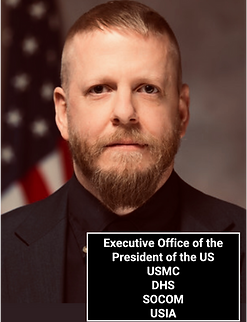
Dr. Howard Gambrill Clark

Professor Gambrill Clark has specialized in influence strategies and psychological warfare for 27 years. He graduated from Yale University with a degree in international relations focusing on the Middle East. While a student, Dr. Clark was a writer for U.S. Information Agency's Middle East / South Asia Division; served on the staff of the Senate Defense Appropriations Subcommittee; and studied Arabic at the American University in Cairo via a Department of Defense grant. After Yale, Dr. Clark served as policy analyst in the Executive Office of the President for the President’s Chief Economic Adviser, focusing on counterterrorism. Following the White House, Dr. Clark served in the U.S. Marine Corps as an intelligence officer and multi-national / special-unit commander with multiple deployments to Iraq as well as Afghanistan and the Philippines. After military service, Dr. Clark was presidentially appointed as Department of Homeland Security Chief Intelligence Officer's Special Assistant. Then, as Senior Intelligence Analyst for Homeland Security Counter-Radicalization, Dr. Clark helped lead the Intelligence Community in intelligence support to countering violent extremism. He was then promoted to Senior Intelligence Officer for Homeland Security Operations Intelligence (headquarters) before acting as consultant (contracted Senior Intelligence Analyst) to Special Operations Command's Counter-Radicalization Branch. While earning his Ph.D. from King's College London War Studies, he served as senior counter-violent-extremism adviser and trainer for USAID, USSOCOM, USDA, DOS, Special Forces, USMC, NATO, and partner governments in southwest Asia and Associate Fellow at the International Centre for the Study of Radicalisation. Recent positions includes: CEO, Stability Institute (non-profit) - training and advising special operators and stabilization professionals on defeating extremist groups throughout five continents. Faculty, National Defense College (UAE) - director and coordinator for 'Countering-Violent-Extremism,' 'Information and Cyberwarfare,' 'Media and National Security,' and 'International Security' programs (sponsored by the U.S. National Defense University) Lecturer, Civil and Political School (Ukraine) He is now the president of Narrative Strategies, where he teaches and researches the fields of strategic influence, psychological warfare, counterterrorism, and countering violent extremism. He is also an associate professor of influence strategy and psychological warfare in Washington, DC. Select books / theses: Influence Warfare Volume I: A Blueprint, Narrative Strategies Ink, Washington, DC, 2021 Information Warfare: The Lost Tradecraft, Narrative Strategies, LLC, Washington, DC, 2017 Information as an Instrument of State Power: A Primer, UAE National Defense College, UAE General Headquarters, 2017 Countering Violent Extremism: A Primer, UAE National Defense College, UAE General Headquarters, 2017 Defeating Violent Extremists: The Tradecraft, UAE National Defense College, UAE General Headquarters, 2016 Village Stability Operations, U.S. Army Peacekeeping & Stability Operations Institute, 2015 (coauthor) Lions of Marjah: Why Marjah’s Militia Combats Violent Extremists, King’s College London thesis, 2014 Revolt Against Al-Qa`ida: A Strategy to Empower Muslims and Collapse International Insurgency, Light of New Orleans Publishing, New Orleans, 2010 Narrative Analysis: Taliban, Special Operations Command, Tampa, 2010 (coauthor) Kill Al Qaeda, Light of New Orleans Publishing, New Orleans, 2009 Select articles and chapters: "War and Narrative," chapter in Dangerous Narratives: Warfare, Strategy, Statecraft, Narrative Strategies Ink, 2020. "How to Teach Influence: Thoughts on a New Discipline," article in Teaching Public Diplomacy and the Information Instruments of Power in a Complex Media Environment, National War College and U.S. Advisory Commission on Public Diplomacy, Washington, DC 2020. “Money and Stabilization,” National Defense Journal, National Defense College, UAE, June 2017 “The Responsibility to Protect in the Context of State-Sponsored Terror,” Defense and Intelligence Norway,” July 2016 (coauthor) “Go Local,” American Interest, July/August 2015 “Regimental Effects Operations Center: Enhancing Situational Awareness and Achieving Unity of Effort in Nonkinetics,” The Marine Corps Gazette, Volume 96, Issue 8, 2012 (supporting author) “Ending Al Qaeda,” American Interest, Volume 6, Number 6, July/August 2011 (coauthor) “The Accidental Ideologue,” Jane's Terrorism and Security Monitor, 2010 Twenty-eight classified or official-use-only cross-Intelligence-Community strategic assessments on countering al-Qa`ida for cabinet-level leaders and White House, 2007 – 2009 Three National Economic Council damage assessments for potential biological terrorist attacks, 2001 Six articles on Middle East leadership and Iraqi resistance for Department of State, 1999.